(Milan, 1913 – Milan, 1999)
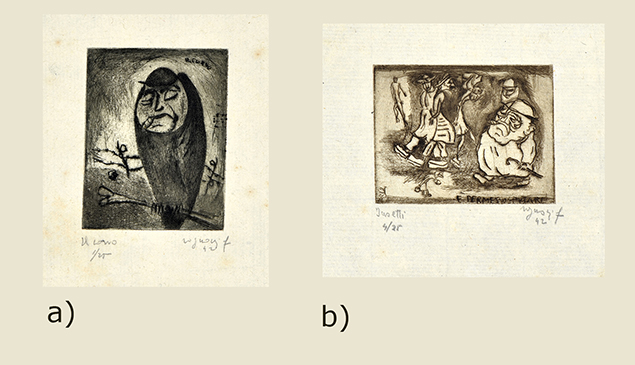
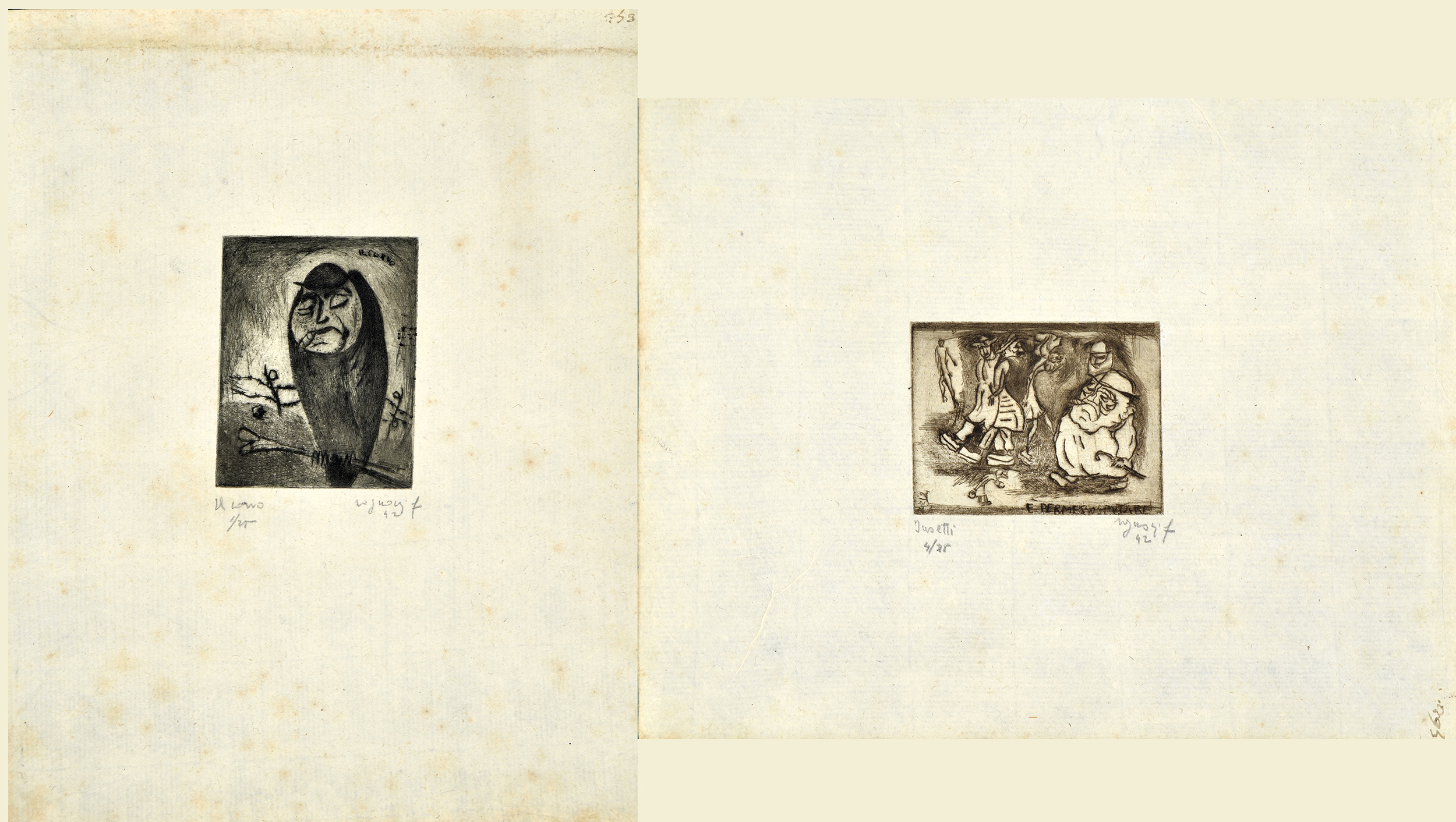
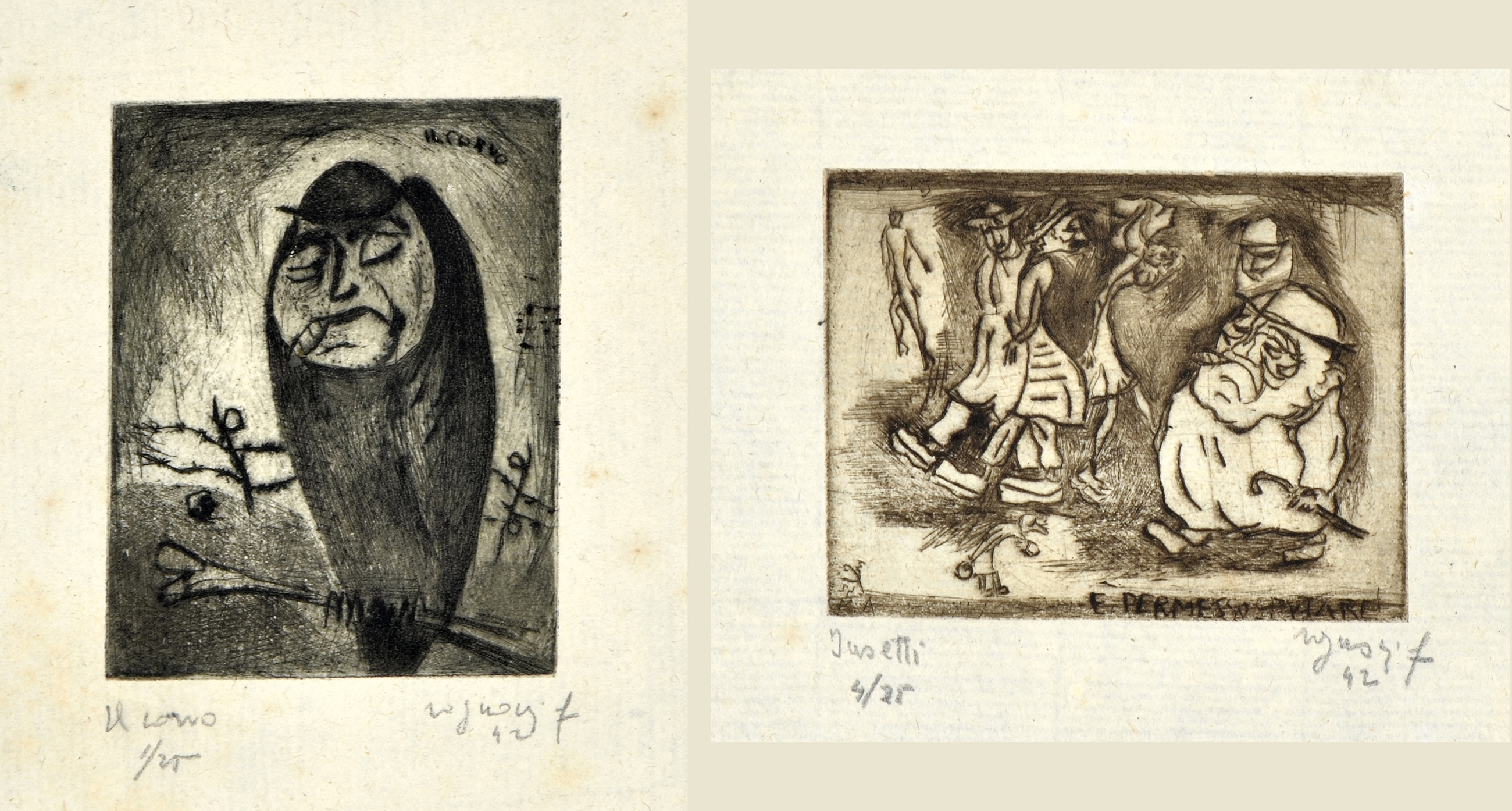
a) IL CORVO b) INSETTI Two etchings, sold together, 1942
a) Il Corvo (The Raven); etching and aquatint on laid paper. Titled, numbered, signed and dated in pencil bottom margin Il corvo 1/25 rognoni f 42. To the platemark 80 x 63 mm, the full sheet measuring 272 x 216 mm.
b) Insetti (Insects); etching and aquatint on laid paper. Inscribed on the plate E' PERMESSO SPUTARE. Titled, numbered, signed and dated in pencil bottom margin Insetti 4/25 rognoni f 42. To the platemark 63 x 80 mm, the full sheet measuring 216 x 272 mm.
A painter, draughtsman, printmaker, and illustrator, Franco Rognoni was largely self-taught, supplementing his independent study with evening courses at the Higher School of Art of the Castello Sforzesco in Milan. His artistic vision was deeply shaped by European modernism—particularly Chagall, Klee, Modigliani, and Picasso—whose works he first encountered in the library of art critic Raffaello Giolli.
Following his debut solo exhibition in 1938, Rognoni entered a landmark thirty-year collaboration with Milan’s prestigious Galleria dell'Annunciata in 1949–1950, becoming closely associated with leading poets and intellectuals such as Salvatore Quasimodo and Alfonso Gatto. Celebrated for an independent, poetic, and subtly ironic figurative language, he also produced acclaimed series of illustrations for European literary classics, including The Divine Comedy, Don Quixote, The Betrothed, and Les Misérables.
Printmaking stood as a central pillar of his practice from the late 1930s onward, seamlessly bridging his painting and literary illustrations. Working primarily in etching, drypoint, aquatint, and woodcut, Rognoni developed a refined, incisive line that echoed the graphic sensibility of German Expressionism without sacrificing his lyrical touch. During World War II, while living in Luino on Lake Maggiore, he significantly intensified his graphic output, turning to printmaking as an intimate medium to explore music, social themes, and the human condition.