(BOLOGNA ? - 1574)
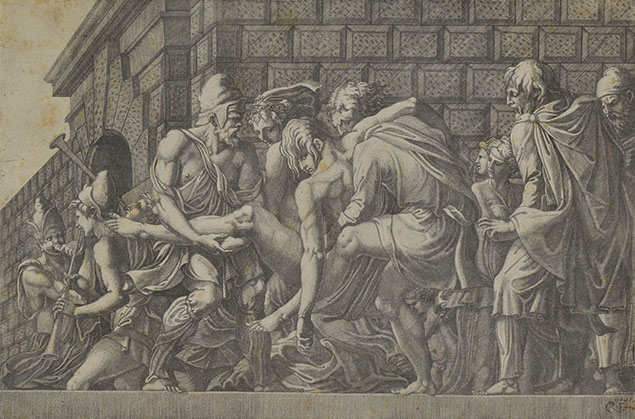
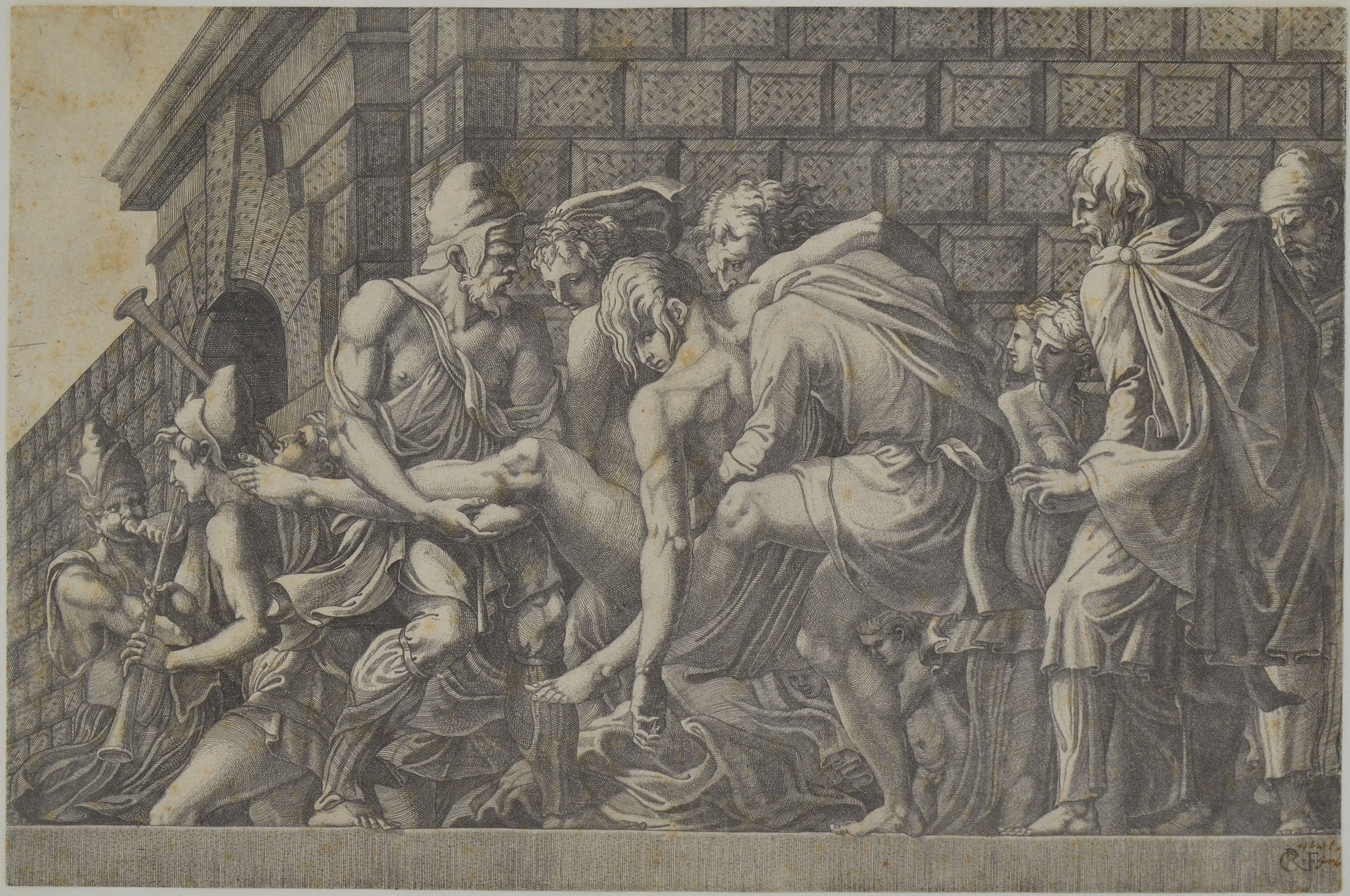
WOUNDED HECTOR CARRIED INTO TROY, c. 1540
Engraving, c. 1540, after Francesco Primaticcio. A rare impression of the first state of two (according to Aldovini), before the inscription A. FONTA. BLEO. BOL. at the bottom center, which credits Primaticcio's invention.
Signed on the plate with the monogram GR.F., which features an early, illegible ink inscription superimposed.
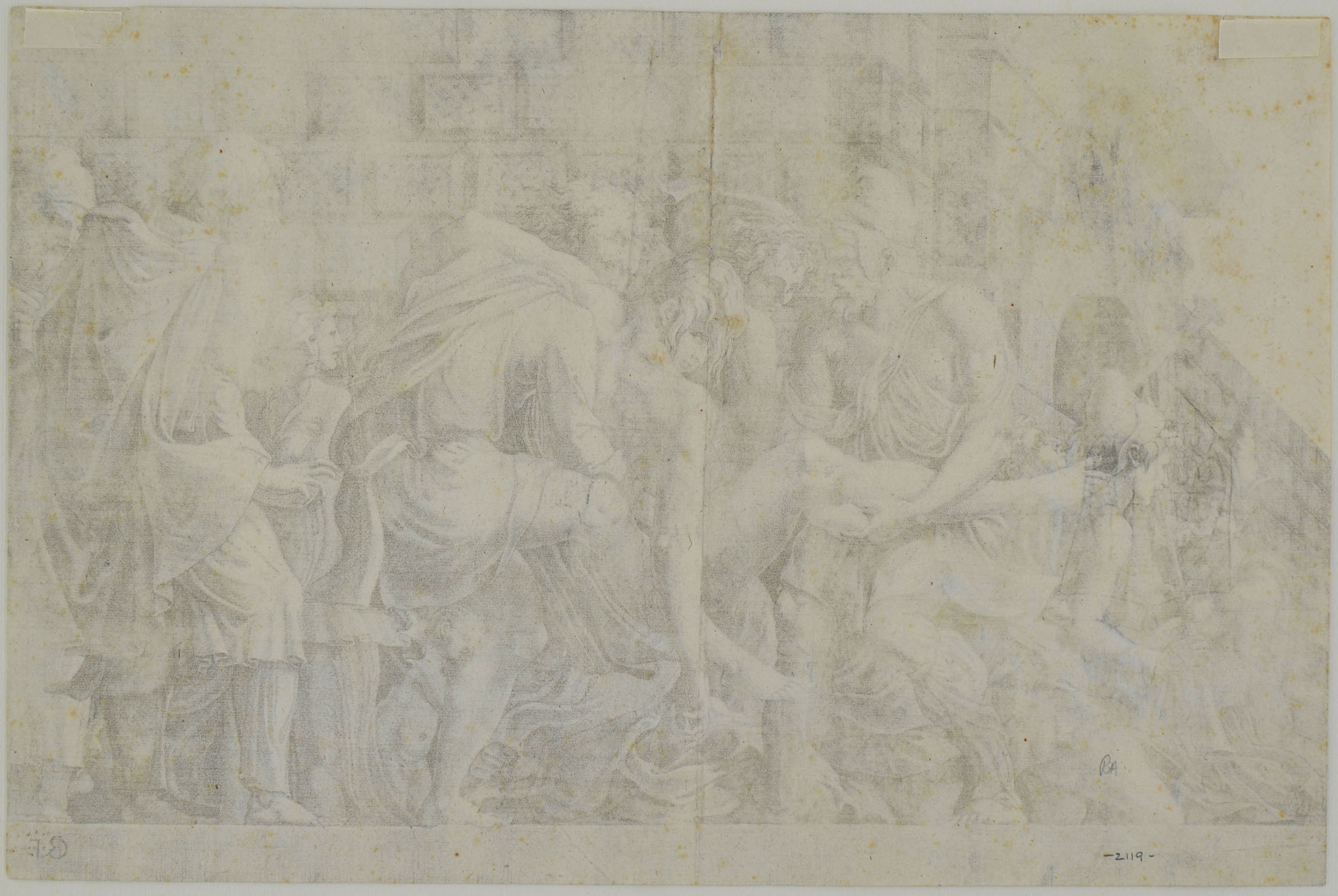
A fine, complete impression measuring 254 x 385 mm (composition size). Minor imperfections, but overall in very good condition. Traces of an unidentified watermark.
Primaticcio’s preparatory drawing—executed in the same direction, squared for transfer, and nearly identical in detail and size to the engraving—is currently preserved in the Musée du Louvre (inv. 8567).
The identification of the two states of this print is due to Laura Aldovini; see: Laura Aldovini, I soggetti del Primaticcio a Fontainebleau nelle stampe del XVI secolo, Master's thesis, Università Cattolica del Sacro Cuore di Milano, A.A. 1998-1999 (supervised by Prof. P. Bellini).
Bolognese engraver and goldsmith mentioned by Vasari. Some of his prints published in Rome, 1538-43; master of the dies at the Bologna mint, 1560-c.1573; buried in Bologna in 1574. There are no signed prints, and his oeuvre remains unclear. Voss identified three plates after Salviati as being by him. On the contrary, Suzanne Boorsch identified him with Master FG, an engraver from Primaticcio.
According to some scholars, the works of the Salviati and Primaticcio groups are incompatible and cannot be attributed to the same artist. Indeed, at the British Museum, the prints remain classified under the monogrammist FG or (for the Salviati group) as Fagiuoli, pending greater certainty of their identification.